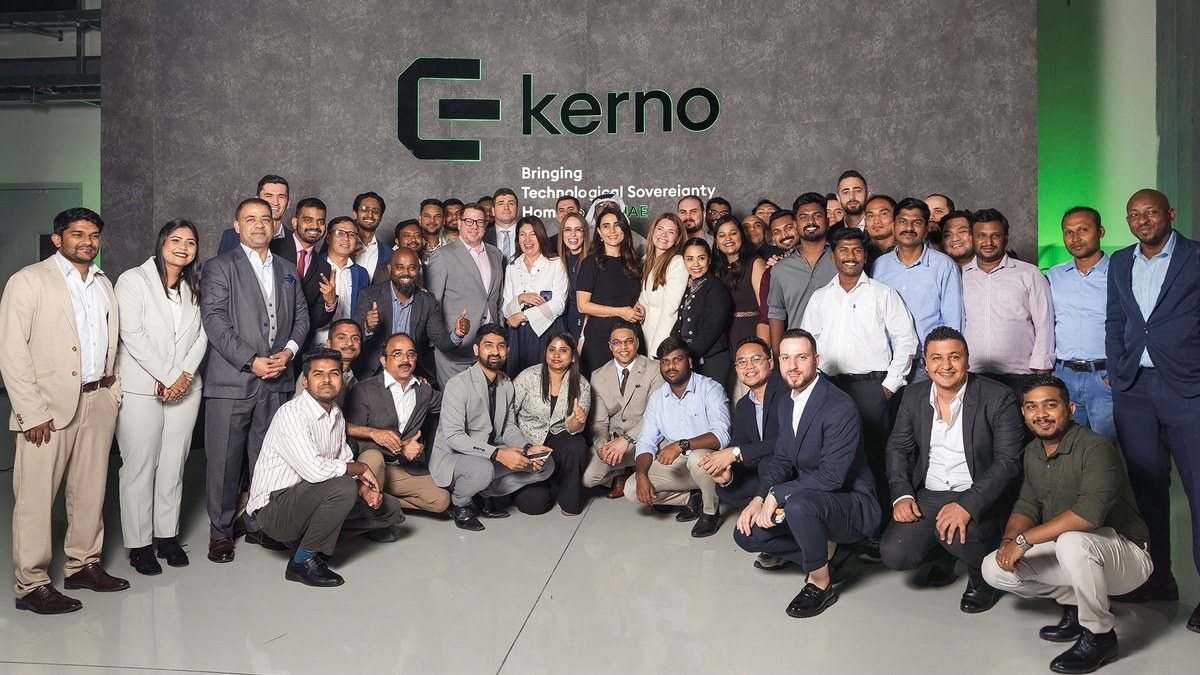
In 2024 we were hired to sell UAE-made servers to buyers who had bought from the same three global vendors for twenty years.
Kerno builds enterprise infrastructure in the Emirates: servers, storage, the hardware underneath everything else. The pitch is genuinely attractive in this region: local manufacturing, shorter lead times, support in the same time zone.
The obstacle is not the pitch. It is that nobody gets fired for buying the incumbent, and a new name in infrastructure has to survive a procurement process designed to filter out new names.
What we did
We ran outbound into UAE enterprise IT for over two years: 205 meetings booked, 134 confirmed held, 121 companies put in front of Kerno.
Government, healthcare, banking, retail, construction, facilities management. The General Secretariat of the Executive Council. Dubai Integrated Economic Zone. Mashreq. American Hospital Dubai and the University Hospital of Sharjah. Al Ghurair Investment, Sharaf DG, Grand Store, Western International. ALEC Engineering, AlGhaith Energy, Imdaad, Prime Health.
Every meeting was qualified before it was accepted. The chat record for this account reads like an infrastructure survey, because that is what it became: how many physical servers, what the hybrid split looks like, whether they run VMware, whether disaster recovery is in place, which workloads have already gone to Azure or AWS. Kerno's team walked into meetings already knowing the estate.
Afterwards, the summary went back with the technical questions asked, the objection raised and the agreed next step. Referral chains were worked deliberately and logged: CIO to infrastructure lead to the technical team.
Eighteen meetings in eighteen days
In February one of our reps booked three Kerno meetings in a single day, which took him to eighteen meetings in eighteen consecutive working days.
There is no clever technique in that number. It is a person picking up the phone every morning, in a market where most of the people he wants have gatekeepers and half the buyers are travelling. What made it repeatable was the coaching loop underneath: his calls were reviewed weekly, he carried two focus areas at a time, and the scenarios he practised against were built from conversations that had actually happened on this account.
The objection we could not argue away, and did not try
The same hesitation came back across almost every account. Kerno was new. Buyers asked about the client base, about references, about what happens when something fails at two in the morning.
We did not coach around it. We reported it, every time, in the client's own channel, because a vendor who knows exactly which objection is killing deals can do something about it. One large retailer eventually moved forward on a storage proof of concept rather than a full commitment, a smaller first step, deliberately chosen, and a real one.
What it shows
Selling a challenger product is a reference problem before it is a product problem. Gather the technical estate before the meeting so the vendor arrives informed, report the objection honestly even when it is unflattering, and take the smaller first commitment when it is on offer.